48V Power Wheels: Do They Exist and Are They Worth It?
Everything about 48V Power Wheels and ride-on upgrades — what 48V actually means, what's available, and whether to upgrade vs. buying 24V or 36V.
Affiliate Disclosure
This page contains affiliate links. As an Amazon Associate, PowerWheels HQ may earn a commission on qualifying purchases at no extra cost to you. Our reviews and recommendations are editorially independent.
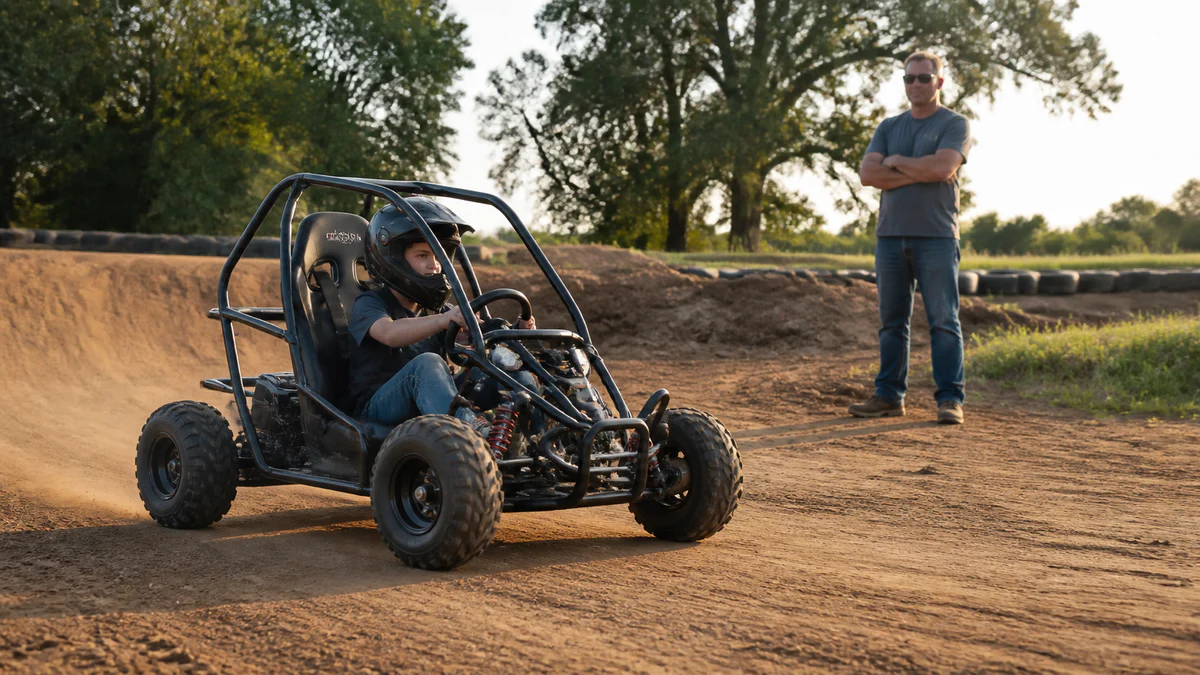
If you've been googling 48V Power Wheels, you've probably already worked through 12V and 24V and are looking for what comes next. Fair enough. Here's the honest answer.
48V Is Not a Standard Power Wheels Voltage
Fisher-Price does not make 48V Power Wheels. The standard Power Wheels lineup runs 6V, 12V, and 24V. 48V in the ride-on context almost always means one of two things: a custom conversion (someone ran two 24V batteries in series) or a third-party manufacturer using 48V on a larger, more powerful platform.
Third-Party 48V Ride-Ons
Some third-party manufacturers — particularly Chinese brands sold through Amazon — list 48V ride-on vehicles. These are typically larger platform vehicles designed for older kids or even adults, with top speeds well above what a standard Power Wheels achieves. Build quality and safety certification vary significantly.
48V Conversions
The Power Wheels modding community has built 48V from two 24V batteries wired in series. The results are very fast. The consequences are also significant: stock motors, wiring, and gearboxes are not rated for 48V and will fail — sometimes spectacularly. This is an advanced build that requires upgraded motors, upgraded wiring (higher gauge), a battery management system, and proper fusing. Not a casual modification.
Who Should Buy 48V
Families with kids 8+ who have maxed out 24V and want more speed. Modding families comfortable with electrical work. Not for the same use case as standard Power Wheels.
The Practical Alternative
Most families asking about 48V are actually asking "how do I get more performance out of a ride-on." The better answer is usually a 24V with an RS775 motor upgrade — lower cost, more controlled power increase, and less risk of destroying the vehicle in the process.
Quick Comparison
48V Kids Electric Ride-On (Third-Party, Large Format)
Various
Older kids, maximum speed
- Voltage
- 48V
- Seats
- 1–2
- Ages
- 8–14 years
- Price
- $400–$800
24V Ride-On with RS775 Motor Upgrade
Various
High performance without 48V risk
- Voltage
- 24V + upgraded motor
- Seats
- 1–2
- Ages
- 5–12 years
- Price
- $350–$500 total
| Product | Best For | Specs | Price | Rating |
|---|---|---|---|---|
48V Kids Electric Ride-On (Third-Party, Large Format) Various | Older kids, maximum speed | 48V · 1–2 seats Ages 8–14 years | $400–$800 | 3.8 |
24V Ride-On with RS775 Motor Upgrade Various | High performance without 48V risk | 24V + upgraded motor · 1–2 seats Ages 5–12 years | $350–$500 total | 4.2 |
Prices are approximate and subject to change. Always verify current pricing before purchasing.
Our Picks — In Detail
48V Kids Electric Ride-On (Third-Party, Large Format)
Various
48VSeats
1–2Ages
8–14 yearsPrice
$400–$800
Third-party 48V ride-on vehicles for older kids and teens. Larger platforms, higher top speeds (often 10–15 mph), and adult-inspired vehicle styling. Quality and safety certification vary — read reviews and verify safety specs carefully.
Pros
- Maximum speed in the ride-on category
- Larger platform for older kids
- Unique high-performance niche
Cons
- Quality varies significantly by manufacturer
- Safety certification not always to US standards
- Expensive
- Requires adult supervision
24V Ride-On with RS775 Motor Upgrade
Various
24V + upgraded motorSeats
1–2Ages
5–12 yearsPrice
$350–$500 total
A 24V ride-on with an RS775 motor upgrade is the practical alternative to a 48V build. More speed than stock 24V, less electrical stress than 48V, and components that are designed to work together.
Pros
- Controlled performance increase
- Known motor compatibility
- Better safety profile than 48V
- More affordable than dedicated 48V vehicle
Cons
- Still requires mechanical work
- Lower top speed than true 48V
What to Look For
Voltage (6V / 12V / 24V)
Higher voltage means more power, higher top speed, and better terrain handling. Choose based on your child's age, size, and where they'll ride. 12V is the most popular choice for ages 3–7.
Number of Seats
Single-seat models work for one child; two-seat designs are great for siblings or friends. Two-seaters often put more strain on the motor, so look for adequate power.
Terrain
Most 12V ride-ons handle flat grass and hard surfaces. If you have hills, rough grass, or gravel, look for 24V models with high-traction tires.
Safety Features
Look for seat belts, parental lockout switches, low/high speed settings, and parental remote controls — especially for younger or first-time riders.
Battery & Charging
Check battery life (usually 1–2 hours for 12V) and charge time (8–18 hours). Some premium models offer faster charging or higher-capacity batteries.