Best Ride-On Cars for Sand and Beach Use
The honest guide to ride-on cars for sand and beach — which vehicles can handle it, which will die trying, and what terrain features actually matter.
Affiliate Disclosure
This page contains affiliate links. As an Amazon Associate, PowerWheels HQ may earn a commission on qualifying purchases at no extra cost to you. Our reviews and recommendations are editorially independent.
Looking for the best ride-on cars for sand and beach use? Our top pick is the Polaris RZR 900 24V. It leads this guide as best for genuine beach sand performance with a 4.8/5 rating. The full comparison and the tradeoffs are below.
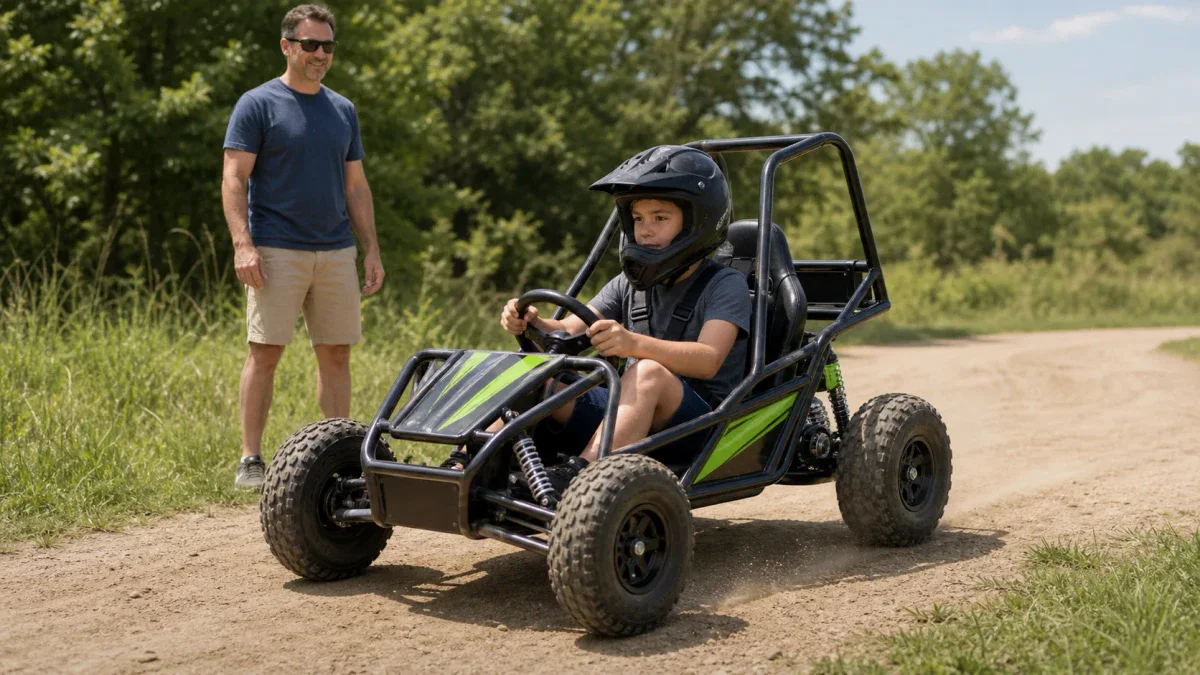
Sand is hard mode for electric ride-on toys. Harder than grass, harder than gravel, harder than anything most parents think about when they're buying a vehicle for the backyard. And if you've ever watched a well-meaning parent bring a standard 12V Power Wheels to the beach and watch it stall in the first ten feet of sand, you know exactly why this guide needs to exist.
The problem is fundamental: sand creates rolling resistance that works directly against an underpowered motor. Fine, dry beach sand — the deep loose stuff above the tide line — is the worst case. Damp, packed sand near the water is more manageable, but you still can't count on it staying that way. Motors heat up, wheels spin out, and kids end up frustrated.
Why Most 12V Vehicles Fail on Sand
Standard 12V ride-on cars — your typical Power Wheels Jeep, sports car, even most UTVs — are designed for pavement and light grass. They have adequate motors for those surfaces. Sand is not those surfaces. The motors are undersized for the constant drag, plastic wheels with minimal tread are useless in loose sand, and the vehicles are typically too low-clearance for any beach with actual terrain variation.
Some 12V vehicles with rubber wheels and dual rear motors will handle packed wet sand. Most won't handle the dry loose stuff at all. Don't take a 6V vehicle to the beach. It will not end well.
The ATV/UTV Category Is the Right Starting Point
If you want a ride-on for beach use, start in the ATV or UTV category. These vehicles are designed with sand and off-road terrain in mind: higher ground clearance, wider rubber tires with actual tread, and typically more torque for the load. The Power Wheels Dune Racer name isn't accidental — it's optimized for looser terrain.
A 24V ATV or UTV is genuinely capable on most beach sand. The extra voltage means the motors have real reserve power for the resistance. Peg Perego's 24V offerings handle beach sand better than anything in the 12V category.
What Actually Kills Ride-Ons at the Beach
Beyond the immediate stalling problem, sand is genuinely destructive to electric motors over time. Fine sand particles get into motor bearings, gearboxes, and wheel assemblies. Salt air accelerates corrosion on electrical connections. Wet sand packed into wheel wells and chassis creates grit that grinds against moving parts.
If you're using a ride-on at the beach regularly, rinse it with fresh water after each use. Blow out any accessible motor vents. Keep it out of direct saltwater. These habits extend the vehicle's life significantly — without them, you're looking at accelerated wear on any vehicle in this category.
The Honest Beach Verdict by Vehicle Type
Sports cars (Lamborghini, Ferrari, McLaren styles): not a chance on real beach sand. Decorative on anything but pavement.
Licensed Jeeps and trucks: maybe on packed wet sand. Not on dry loose sand. The Jeep Wrangler Power Wheels is the best of this group for marginal beach terrain.
Standard UTVs (Dune Racer, similar): capable on packed sand, marginal on dry loose sand. Functional at most real beach environments.
24V ATVs and UTVs (Peg Perego, big-wheel options): the right tool. Handles most beach sand with confidence. This is what you want if beach use is a real priority.
Post-Beach Maintenance
Non-negotiable: rinse with fresh water. Specifically rinse the wheel wells, undercarriage, and any visible motor vents. Let it dry fully before charging or storing. Salt and sand together are the combination that takes years off a vehicle's life. A five-minute rinse is cheap insurance.
Quick Comparison
Polaris RZR 900 24V
Peg Perego
Best for genuine beach sand performance
- Voltage
- 24V
- Seats
- 2
- Ages
- 4-10
- Price
- $450-$600
Dune Racer Extreme
Power Wheels
Best 12V option for packed beach sand
- Voltage
- 12V
- Seats
- 2
- Ages
- 3-7
- Price
- $250-$320
Big Wheel ATV 24V
Actionbikes
Best single-seat 24V ATV for beach use
- Voltage
- 24V
- Seats
- 1
- Ages
- 4-9
- Price
- $300-$420
Jeep Wrangler 12V
Power Wheels
Best for beach-adjacent use on firm surfaces
- Voltage
- 12V
- Seats
- 2
- Ages
- 3-7
- Price
- $280-$370
24V UTV Ride-On with Big Tires
Best Choice Products
Best budget 24V option for sand use
- Voltage
- 24V
- Seats
- 2
- Ages
- 4-9
- Price
- $350-$480
| Product | Best For | Specs | Price | Rating |
|---|---|---|---|---|
Polaris RZR 900 24V Peg Perego | Best for genuine beach sand performance | 24V · 2 seats Ages 4-10 | $450-$600 | 4.8 |
Dune Racer Extreme Power Wheels | Best 12V option for packed beach sand | 12V · 2 seats Ages 3-7 | $250-$320 | 4.4 |
Big Wheel ATV 24V Actionbikes | Best single-seat 24V ATV for beach use | 24V · 1 seat Ages 4-9 | $300-$420 | 4.3 |
Jeep Wrangler 12V Power Wheels | Best for beach-adjacent use on firm surfaces | 12V · 2 seats Ages 3-7 | $280-$370 | 4.3 |
24V UTV Ride-On with Big Tires Best Choice Products | Best budget 24V option for sand use | 24V · 2 seats Ages 4-9 | $350-$480 | 4.1 |
Prices are approximate and subject to change. Always verify current pricing before purchasing.
Our Picks — In Detail
Polaris RZR 900 24V
Peg Perego
24VSeats
2Ages
4-10Price
$450-$600
The clearest answer for beach use. 24V dual motors, high ground clearance, wide rubber tires with actual tread. Handles dry loose sand better than anything in its price range. Post-beach rinse is still required, but this vehicle can take what the beach dishes out.
Pros
- 24V handles loose dry sand
- High clearance and wide wheelbase
- Best terrain performance in the category
Cons
- Most expensive option
- Heavy — harder to transport to the beach
Dune Racer Extreme
Power Wheels
12VSeats
2Ages
3-7Price
$250-$320
The best 12V vehicle for beach-adjacent use. Wide rubber tires and two rear motors give it more traction than standard ride-ons. Handles packed wet sand near the waterline. Won't handle deep dry sand — but for most family beach visits, the packed areas near the water are where kids drive anyway.
Pros
- Best 12V option for sand environments
- Wide rubber tires improve traction
- More affordable than 24V options
Cons
- Will struggle in deep dry sand
- 12V motors will heat up under sustained sand resistance
Big Wheel ATV 24V
Actionbikes
24VSeats
1Ages
4-9Price
$300-$420
Oversized off-road tires give this ATV genuine sand capability. 24V power means the motor isn't working at its limit on loose terrain. Single seat limits group use, but for a child riding solo on beach or sand terrain, this handles it well.
Pros
- Big off-road tires designed for loose terrain
- 24V keeps motor reserve for sand resistance
- More maneuverable than two-seat options
Cons
- Single seat only
- Build quality not at Peg Perego level
Jeep Wrangler 12V
Power Wheels
12VSeats
2Ages
3-7Price
$280-$370
Better than most 12V vehicles on sand thanks to its real rubber tires and two-motor drivetrain. Manages packed sand and firm beach areas. Avoid deep loose sand — it will struggle. The Jeep styling and build quality are both solid for a 12V option.
Pros
- Rubber tires better than plastic-wheel alternatives
- Jeep styling is legitimately rugged-looking
- Two motors provide more torque than single-motor models
Cons
- 12V ceiling — not for serious sand use
- Will heat motors on sustained loose sand driving
24V UTV Ride-On with Big Tires
Best Choice Products
24VSeats
2Ages
4-9Price
$350-$480
A two-seat 24V UTV at lower cost than Peg Perego. Big tires and 24V power mean it handles sand better than 12V alternatives. Build quality reflects the lower price — the drivetrain is good, the finish is average. For families who want beach capability without the premium cost, this works.
Pros
- 24V at lower price than Peg Perego
- Two seats
- Big tires for better sand traction
Cons
- Build quality noticeably below Peg Perego
- Salt and sand corrosion hits cheaper components harder
What to Look For
Voltage (6V / 12V / 24V)
Higher voltage means more power, higher top speed, and better terrain handling. Choose based on your child's age, size, and where they'll ride. 12V is the most popular choice for ages 3–7.
Number of Seats
Single-seat models work for one child; two-seat designs are great for siblings or friends. Two-seaters often put more strain on the motor, so look for adequate power.
Terrain
Most 12V ride-ons handle flat grass and hard surfaces. If you have hills, rough grass, or gravel, look for 24V models with high-traction tires.
Safety Features
Look for seat belts, parental lockout switches, low/high speed settings, and parental remote controls — especially for younger or first-time riders.
Battery & Charging
Check battery life (usually 1–2 hours for 12V) and charge time (8–18 hours). Some premium models offer faster charging or higher-capacity batteries.