Power Wheels vs. Balance Bike: Which Should You Buy?
Power Wheels vs. balance bike — an honest comparison of what each teaches, what each delivers, and which one is the right buy for your child's age and needs.
Affiliate Disclosure
This page contains affiliate links. As an Amazon Associate, PowerWheels HQ may earn a commission on qualifying purchases at no extra cost to you. Our reviews and recommendations are editorially independent.
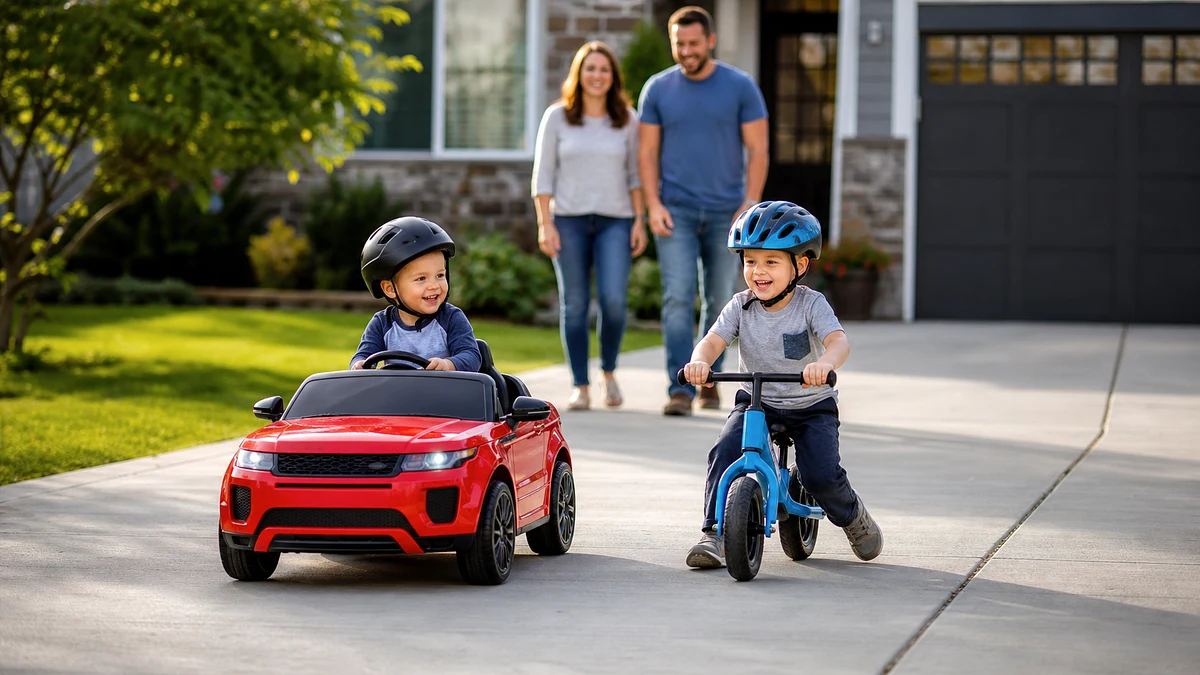
These are not the same kind of toy. That's the starting point. People compare them as if you're choosing between two bikes, but a balance bike and a ride-on car are completely different objects that serve completely different purposes. The confusion costs parents money.
A balance bike teaches a real physical skill that transfers directly to riding a pedal bike. Kids who learn on balance bikes skip training wheels entirely and transition to pedal bikes faster and more confidently than kids who don't. That's not marketing — it's the consistent experience of parents across every demographic who've tried both paths.
A ride-on car teaches nothing that transfers anywhere. It's a toy. A good, enjoyable toy that kids love and that gives them a sense of autonomy and speed in a safe environment. But there's no skill development happening that will matter at 8 or 10. You're paying for fun, not for developmental outcomes.
Does That Mean Balance Bikes Are Better?
Not exactly. "Better" depends entirely on what you're trying to get out of the purchase.
If you have a 2-3 year old and you can only buy one outdoor toy, a balance bike edges out a ride-on for developmental return on investment. The skill it builds (balance, steering, momentum management) is genuinely useful. Add a good kids' scooter and you have an outdoor setup that will get years of use and build real capabilities.
But "can only buy one" is often not the real constraint. Many families buy both, and that's a completely legitimate choice. They serve different things on different days. There are evenings when your kid wants to zoom around the yard fast without effort — that's the ride-on's job. There are afternoons when they're actively working on coordination and independence — that's the balance bike.
The Fun Gap Is Real
Here's the honest part: ride-on cars are more fun for most young kids than balance bikes. The lack of effort, the speed without pedaling, the dashboard with buttons and sounds — there's a reason kids light up when they see ride-on cars in a way they don't always react to balance bikes.
Balance bikes require practice and sometimes frustration before they click. Ride-ons are immediately satisfying from the first session. If your goal is a birthday gift that gets an immediate reaction and daily use without a learning curve, ride-on cars win that comparison easily.
Age Makes the Decision Easier
Under 18 months: neither. Both require a level of development that isn't there yet.
18 months to 3 years: balance bike first, ride-on second if the budget allows. The balance bike builds skills during the window when balance development is most rapid.
3 to 5 years: both are equally valid. At this age, kids are actively using balance bikes and equally enthusiastic about ride-ons. If you only have one, go with whichever matches your child's current interest.
5 and up: the balance bike is probably a pedal bike at this point. Ride-ons at 5-7 are still enjoyed but they're heading toward the end of their appeal window.
The Opinionated Take
If your child is 2-4 and you can only buy one: balance bike plus a scooter. You're building skills, you're covering outdoor mobility, and you're spending less money. The ride-on itch can be scratched with one session on a neighbor's vehicle.
If you have the budget for both: buy both. They complement each other rather than compete. The ride-on covers the "effortless fun" use case. The balance bike covers the "learning to be mobile" use case. Neither does the other's job.
Quick Comparison
Strider 12 Sport Balance Bike
Strider
Best overall balance bike for developmental outcomes
- Voltage
- N/A
- Seats
- 1
- Ages
- 18 months - 5 years
- Price
- $100-$130
Power Wheels Dune Racer
Power Wheels
Best ride-on for pure enjoyment and outdoor independence
- Voltage
- 12V
- Seats
- 2
- Ages
- 3-7
- Price
- $250-$320
Radio Flyer Glide and Go Balance Bike
Radio Flyer
Best budget balance bike
- Voltage
- N/A
- Seats
- 1
- Ages
- 18 months - 4 years
- Price
- $50-$80
Razor A Kick Scooter
Razor
The third leg of a no-ride-on outdoor toy setup
- Voltage
- N/A
- Seats
- N/A
- Ages
- 5+
- Price
- $30-$50
| Product | Best For | Specs | Price | Rating |
|---|---|---|---|---|
Strider 12 Sport Balance Bike Strider | Best overall balance bike for developmental outcomes | N/A · 1 seat Ages 18 months - 5 years | $100-$130 | 4.9 |
Power Wheels Dune Racer Power Wheels | Best ride-on for pure enjoyment and outdoor independence | 12V · 2 seats Ages 3-7 | $250-$320 | 4.6 |
Radio Flyer Glide and Go Balance Bike Radio Flyer | Best budget balance bike | N/A · 1 seat Ages 18 months - 4 years | $50-$80 | 4.6 |
Razor A Kick Scooter Razor | The third leg of a no-ride-on outdoor toy setup | N/A · N/A seats Ages 5+ | $30-$50 | 4.7 |
Prices are approximate and subject to change. Always verify current pricing before purchasing.
Our Picks — In Detail
Strider 12 Sport Balance Bike
Strider
N/ASeats
1Ages
18 months - 5 yearsPrice
$100-$130
The benchmark balance bike. Adjustable seat fits from 18 months through age 5. No pedals, no training wheels — kids learn to balance and steer naturally. Virtually every child who learns on a Strider transitions to a pedal bike faster than those who use training wheels. Lightweight and nearly indestructible.
Pros
- Proven developmental track record
- Lightweight — kids can pick it up themselves
- Grows with the child from 18 months to 5 years
Cons
- No drivetrain skills transfer
- Not fun in the same immediate way as a motorized vehicle
Power Wheels Dune Racer
Power Wheels
12VSeats
2Ages
3-7Price
$250-$320
Two seats, off-road styling, and enough performance to keep kids engaged through age 7. No skill development, but maximum fun-per-dollar for kids who want to drive without effort. The two-seat layout means a parent or sibling can ride along, which extends the appeal.
Pros
- Immediately enjoyable from first session
- Two seats for shared riding
- Works on grass and light terrain
Cons
- Teaches no transferable skills
- Outgrown faster than a balance bike
- Higher price point
Radio Flyer Glide and Go Balance Bike
Radio Flyer
N/ASeats
1Ages
18 months - 4 yearsPrice
$50-$80
A well-made balance bike at a significantly lower price than the Strider. Slightly heavier, slightly less adjustable, but delivers the same developmental outcome at a more accessible cost. A solid choice if the budget is limited.
Pros
- Lower price than Strider
- Teaches the same core skills
- Radio Flyer quality is reliable
Cons
- Slightly heavier than Strider
- Less seat adjustment range
Razor A Kick Scooter
Razor
N/ASeats
N/AAges
5+Price
$30-$50
If you're skipping the ride-on and going balance bike + scooter, this is the scooter. The Razor A has been the standard for 20 years. It's inexpensive, durable, and kids use it actively through elementary school. The balance bike and the Razor A together cover more developmental and use-case ground than a balance bike alone.
Pros
- Classic, proven design
- Inexpensive and durable
- Used actively well into elementary school
Cons
- Minimum age around 5 for confident use
- Not motorized — requires effort
What to Look For
Voltage (6V / 12V / 24V)
Higher voltage means more power, higher top speed, and better terrain handling. Choose based on your child's age, size, and where they'll ride. 12V is the most popular choice for ages 3–7.
Number of Seats
Single-seat models work for one child; two-seat designs are great for siblings or friends. Two-seaters often put more strain on the motor, so look for adequate power.
Terrain
Most 12V ride-ons handle flat grass and hard surfaces. If you have hills, rough grass, or gravel, look for 24V models with high-traction tires.
Safety Features
Look for seat belts, parental lockout switches, low/high speed settings, and parental remote controls — especially for younger or first-time riders.
Battery & Charging
Check battery life (usually 1–2 hours for 12V) and charge time (8–18 hours). Some premium models offer faster charging or higher-capacity batteries.