Power Wheels Safety Guide for Parents
A practical Power Wheels safety guide — helmets, terrain rules, supervision requirements, and the real risks worth knowing about without the alarmism.
Affiliate Disclosure
This page contains affiliate links. As an Amazon Associate, PowerWheels HQ may earn a commission on qualifying purchases at no extra cost to you. Our reviews and recommendations are editorially independent.
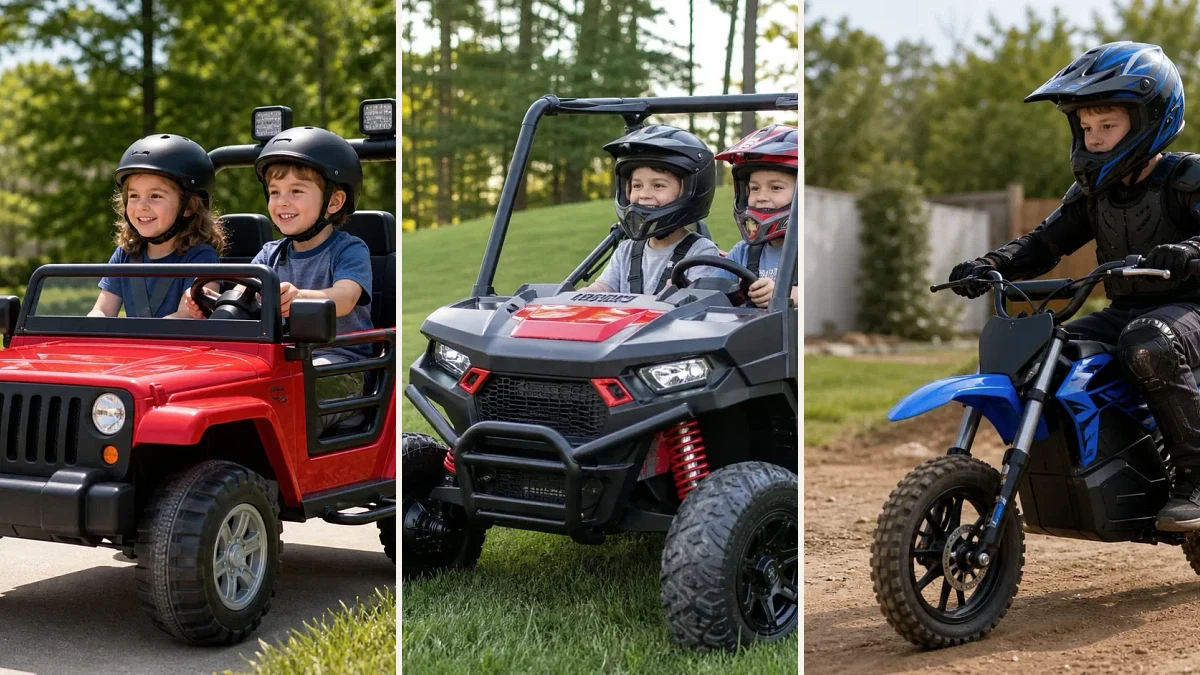
Power Wheels are not dangerous in the way that parents sometimes worry about. They're not fast enough to cause serious injuries on flat ground. A kid falling out of a 5 mph ride-on on grass is not a medical emergency.
The real risks are narrower and more specific: unsupervised use near slopes, driveways that lead to streets, and children who are too young to understand steering. Those three scenarios are where things actually go wrong. Everything else is manageable with basic sense.
Helmets Are Not Optional
No, your kid doesn't need a full motorcycle setup. But a basic bicycle helmet — the kind you probably already own — should be on before they get in any ride-on car. The reason is simple: a tipping vehicle on a slope will put a child's head at risk of ground contact. Helmets prevent the one injury that actually matters. This is not negotiable based on age or vehicle speed.
Other protective gear (knee pads, elbow pads) is optional and context-dependent. On a driveway with a 3-year-old doing slow loops, it's overkill. On a hillier yard with a 6-year-old going full speed in a 24V UTV, it starts to make sense.
No Streets. Ever.
The vehicles look like cars. They are not cars. They have no brakes worth the name — they decelerate when you release the pedal, they don't stop sharply. They are not visible to drivers. They are not fast enough to avoid a car. This rule has no exceptions.
If your driveway connects directly to a street with any traffic, treat the driveway as off-limits or set physical barriers. Even low-traffic streets with slow-moving cars are a dangerous combination with a ride-on vehicle that a driver may not see.
Slopes Are the Main Terrain Hazard
A flat yard or flat driveway is essentially safe. A slope changes the math. Ride-on cars are top-heavy, and they tip on steeper inclines. The tipping threshold varies by vehicle — wider wheelbase UTVs are more stable than narrower sports cars — but any meaningful slope deserves supervision and caution with younger kids.
The specific problem is descent: a child who doesn't understand how to steer down a slope, or whose vehicle picks up speed and can't be stopped. For kids under 5, no slopes without a parent present. For kids 5 and up, judgment develops enough that you can assess your specific child and terrain.
Supervision Requirements by Age
Ages 1-3: full supervision, stay within arm's reach. Parental remote control is strongly recommended for this age group. The child doesn't yet understand consequences and won't stop for obstacles.
Ages 4-5: supervised but at a distance. You can be watching from the porch for flat terrain. You should be present for any uneven ground.
Ages 6+: dependent on the child's judgment and terrain. A mature 6-year-old on a flat backyard can have more independence. Any slope or unfamiliar terrain warrants supervision regardless of age.
Seatbelts
Use them when they're present. Most ride-on cars include a basic lap belt or strap, and they're there for a reason. On a tip or a sudden stop, a seatbelt keeps the child in the vehicle instead of in front of it. It takes three seconds to buckle and costs nothing.
Speed Limits and Vehicle Selection
Don't buy more speed than your child needs. A 2-year-old doesn't need 5 mph. A 4-year-old doesn't need a 24V vehicle that tops out at 6 mph on grass. Match the vehicle's capability to the child's ability to handle it — both in terms of physical control and judgment about obstacles. Going up in voltage too fast is the most common parent mistake in this category.
The Two Scenarios That Actually Deserve Your Attention
First: unsupervised use near any slope with a drop. Second: any situation where the driveway connects to a street. These are not theoretical risks. Everything else in this guide is worth knowing, but these are the two situations where a moment of inattention can turn into a real problem. Keep those two scenarios managed and ride-on cars are genuinely safe, enjoyable toys.
Quick Comparison
Toddler Bike Helmet
Joovy
Best helmet for toddlers using ride-ons
- Voltage
- N/A
- Seats
- N/A
- Ages
- 1-5
- Price
- $25-$45
Dune Racer Extreme with Seatbelt
Power Wheels
Best vehicle with built-in seatbelt system
- Voltage
- 12V
- Seats
- 2
- Ages
- 3-7
- Price
- $250-$320
6V Ride-On with Parental Remote
TOBBI
Best safe first ride-on for ages 1-3
- Voltage
- 6V
- Seats
- 1
- Ages
- 1-3
- Price
- $120-$180
Kids Knee and Elbow Pad Set
JBM
Optional protective gear for active outdoor use
- Voltage
- N/A
- Seats
- N/A
- Ages
- 3-8
- Price
- $15-$25
| Product | Best For | Specs | Price | Rating |
|---|---|---|---|---|
Toddler Bike Helmet Joovy | Best helmet for toddlers using ride-ons | N/A · N/A seats Ages 1-5 | $25-$45 | 4.7 |
Dune Racer Extreme with Seatbelt Power Wheels | Best vehicle with built-in seatbelt system | 12V · 2 seats Ages 3-7 | $250-$320 | 4.6 |
6V Ride-On with Parental Remote TOBBI | Best safe first ride-on for ages 1-3 | 6V · 1 seat Ages 1-3 | $120-$180 | 4.3 |
Kids Knee and Elbow Pad Set JBM | Optional protective gear for active outdoor use | N/A · N/A seats Ages 3-8 | $15-$25 | 4.4 |
Prices are approximate and subject to change. Always verify current pricing before purchasing.
Our Picks — In Detail
Toddler Bike Helmet
Joovy
N/ASeats
N/AAges
1-5Price
$25-$45
A well-fitted toddler helmet is the single most important safety accessory for ride-on car use. The Joovy Noodle fits heads down to 18 inches and has a simple ratchet fit system that parents can tighten without tools. Ventilated, lightweight, and CPSC certified.
Pros
- Fits toddler head sizes correctly
- Easy single-hand tightening
- CPSC certified
Cons
- Outgrown faster than you'd like
- Not a substitute for supervision on slopes
Dune Racer Extreme with Seatbelt
Power Wheels
12VSeats
2Ages
3-7Price
$250-$320
The Dune Racer includes a seatbelt for both seats. Wide wheelbase makes it more tip-resistant than sports car-style ride-ons. The lower center of gravity helps on gentle slopes compared to taller vehicles.
Pros
- Seatbelt included for both seats
- Low, wide stance reduces tip risk
- Parental lockout speed settings
Cons
- Still not appropriate for steep terrain
- Seatbelt on young kids requires parental help to buckle
6V Ride-On with Parental Remote
TOBBI
6VSeats
1Ages
1-3Price
$120-$180
For kids under 3, a parental remote control is a safety feature, not a luxury. This 6V vehicle gives the parent override control — they can stop the car, steer it away from obstacles, and set the speed. That's exactly what you need for a 1 or 2-year-old who doesn't yet understand consequences.
Pros
- Parental remote is genuine override control
- 6V keeps speed safe for young kids
- Seatbelt included
Cons
- Outgrown by age 4
- 6V limited to flat surfaces
Kids Knee and Elbow Pad Set
JBM
N/ASeats
N/AAges
3-8Price
$15-$25
Knee and elbow pads for kids who are riding on rougher terrain or in a 24V vehicle with real speed. Optional for flat driveway use, more relevant for off-road situations where tips are more likely.
Pros
- Inexpensive insurance for active riders
- Fits most 3-8 year olds
- Also useful for bikes and scooters
Cons
- Overkill for slow flat-surface use
- Kids sometimes refuse to wear them
What to Look For
Voltage (6V / 12V / 24V)
Higher voltage means more power, higher top speed, and better terrain handling. Choose based on your child's age, size, and where they'll ride. 12V is the most popular choice for ages 3–7.
Number of Seats
Single-seat models work for one child; two-seat designs are great for siblings or friends. Two-seaters often put more strain on the motor, so look for adequate power.
Terrain
Most 12V ride-ons handle flat grass and hard surfaces. If you have hills, rough grass, or gravel, look for 24V models with high-traction tires.
Safety Features
Look for seat belts, parental lockout switches, low/high speed settings, and parental remote controls — especially for younger or first-time riders.
Battery & Charging
Check battery life (usually 1–2 hours for 12V) and charge time (8–18 hours). Some premium models offer faster charging or higher-capacity batteries.