Electric vs. Gas Mini Bikes for Kids: Which One Should You Buy?
Electric vs. gas mini bikes for kids, compared honestly: noise, maintenance, ride time, cost, and which families each type actually fits.
Affiliate Disclosure
This page contains affiliate links. As an Amazon Associate, PowerWheels HQ may earn a commission on qualifying purchases at no extra cost to you. Our reviews and recommendations are editorially independent.
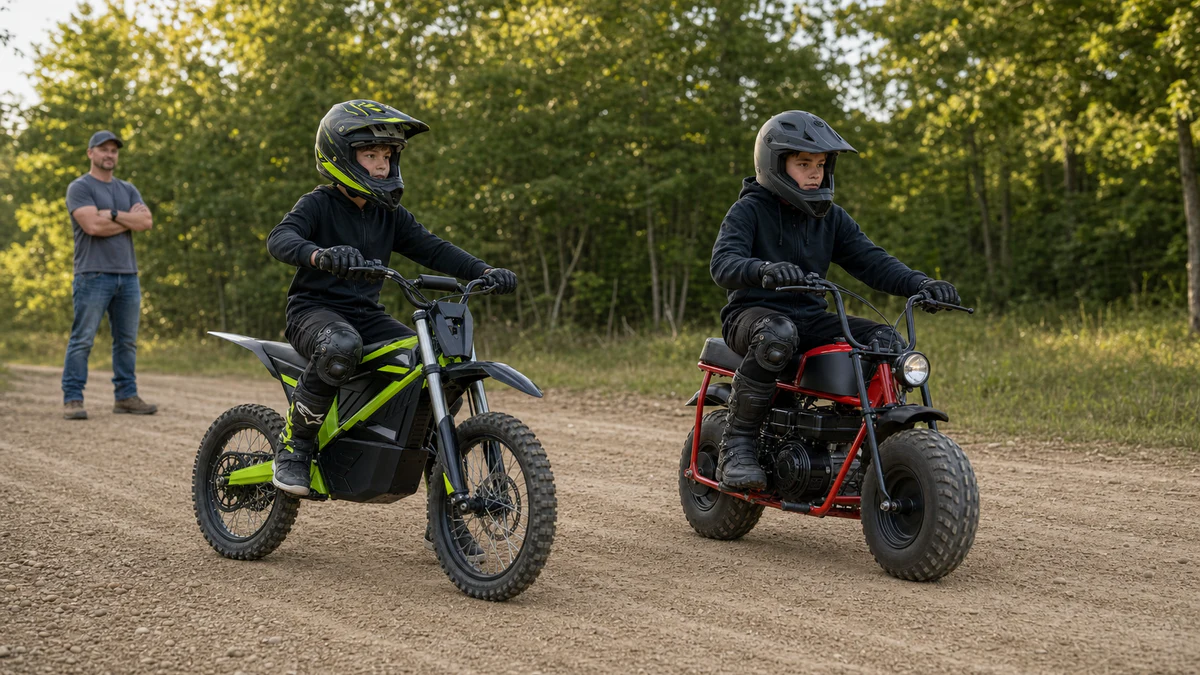
Buy electric. That's the answer for most families, most yards, and most kids: electric mini bikes are quiet enough that your neighbors stay friendly, require essentially zero maintenance, and deliver real dirt-bike performance — 14-17 mph from the Razor line, 20 from the EGO — with none of the fuel, oil, or pull-start drama.
Buy gas if you're on rural property, your kid rides in long sessions that would exhaust two batteries, or you actively want the machine to teach mechanics. Those are real, legitimate reasons — they're just not most families' situation.
The Noise Question Decides More Than You Think
A gas mini bike at full throttle is loud. Not "hmm, I hear something" loud — lawn-equipment-that-never-stops loud, for the entire session, every session. On a suburban lot, that's a neighbor complaint by week two and an HOA letter by week four. Electric bikes emit a whir and the crunch of tires. Your kid can ride at 7 AM on a Saturday and nobody will know.
If you live on acreage, this entire section is irrelevant, and gas gets back one of its biggest penalties. That's why the property question comes first.
Maintenance: Zero vs. Actual Ownership
Electric maintenance is a chain to lube occasionally, tires to check, and a battery to plug in. That's the list.
Gas maintenance is real: oil changes, air filters, spark plugs, carburetor cleaning when it sits too long, fuel that goes stale over winter, and a pull-start that will test your kid's arm and your patience. Here's the honest reframe — for some families that's not a con, it's the point. A Coleman CT200U in the garage is a rolling mechanics class, and a 12-year-old who learns to change oil and diagnose a fouled plug has learned something a sealed electric bike will never teach. If that appeals to you, gas isn't a compromise. If it sounds like a chore, believe yourself.
Ride Time: The One Spec Where Gas Wins Outright
Electric bikes give you 25-40 minutes of hard riding, then an overnight charge. That's fine for a driveway-adjacent session and painful on a big property or a full afternoon of riding. A gas tank refills in thirty seconds, and a one-gallon can extends the day indefinitely. Families who ride together, ride trails, or ride far from an outlet consistently end up gas for this reason alone. A second battery narrows the gap for electric, but adds $80-150 and still means a swap every half hour.
Cost, Honestly
Entry points are similar: a Razor MX350 runs $300-380 and a Coleman CT100U-class gas bike runs $350-500. After that the curves diverge. Electric costs you a replacement battery every couple of years ($50-100); gas costs you fuel, oil, filters, and occasional carb work — plus more in repairs if maintenance slides. Electric is cheaper to own for typical use. Gas gets more economical only when ride volume is high enough that battery limits would force a second electric bike.
Speed and Ceiling
At the kid level, electric and gas overlap more than parents expect: the MX650 does 17 mph, the EGO MB1000 does 20, and the Coleman CT200U sits around 20. Gas pulls away at the top of the range — 125cc pit bikes reach 35-40 mph, which is more machine than most kids should have, and more than any consumer electric kids' bike offers. If your kid is on a trajectory toward real motocross, gas is eventually inevitable. The question is whether it's inevitable now.
The Decision, Compressed
Suburban lot, sessions under an hour, parent who wants to press "on" and go: electric, without hesitation. Rural property, long rides, a kid (or parent) who wants to wrench: gas, and enjoy it. Still torn? Buy electric first — it's the cheaper mistake, the easier resale, and the better teacher of throttle discipline before combustion enters the picture.
Quick Comparison
Razor MX350 Dirt Rocket
Razor
Best electric starting point — the default first mini bike
- Voltage
- 24V
- Seats
- 1
- Ages
- 8-12 years
- Price
- $300-$380
Razor MX650 Dirt Rocket
Razor
Best electric overall — 17 mph and a 220 lb limit
- Voltage
- 36V
- Seats
- 1
- Ages
- 12+
- Price
- $450-$550
EGO MB1000 56V Electric Dirt Bike
EGO
Best electric performance — closes most of the gap to gas
- Voltage
- 56V
- Seats
- 1
- Ages
- 10+
- Price
- $1,000-$1,200
Coleman CT200U Mini Trail Bike
Coleman
Best gas option — the reliable rural-property workhorse
- Voltage
- Gas (196cc)
- Seats
- 1
- Ages
- 13+
- Price
- $400-$550
Apollo 125cc Pit Bike
Apollo
Best for the serious rider headed toward real motocross
- Voltage
- Gas (125cc)
- Seats
- 1
- Ages
- 13+ experienced
- Price
- $700-$1,000
| Product | Best For | Specs | Price | Rating |
|---|---|---|---|---|
Razor MX350 Dirt Rocket Razor | Best electric starting point — the default first mini bike | 24V · 1 seat Ages 8-12 years | $300-$380 | 4.6 |
Razor MX650 Dirt Rocket Razor | Best electric overall — 17 mph and a 220 lb limit | 36V · 1 seat Ages 12+ | $450-$550 | 4.7 |
EGO MB1000 56V Electric Dirt Bike EGO | Best electric performance — closes most of the gap to gas | 56V · 1 seat Ages 10+ | $1,000-$1,200 | 4.8 |
Coleman CT200U Mini Trail Bike Coleman | Best gas option — the reliable rural-property workhorse | Gas (196cc) · 1 seat Ages 13+ | $400-$550 | 4.5 |
Apollo 125cc Pit Bike Apollo | Best for the serious rider headed toward real motocross | Gas (125cc) · 1 seat Ages 13+ experienced | $700-$1,000 | 4.2 |
Prices are approximate and subject to change. Always verify current pricing before purchasing.
Our Picks — In Detail
Razor MX350 Dirt Rocket
Razor
24VSeats
1Ages
8-12 yearsPrice
$300-$380
The entry point for the whole electric category. Fourteen mph through a chain drive, motocross geometry, and a frame sized for 8-12 year olds. Quiet enough for any neighborhood, simple enough that maintenance is a non-topic. Where most families should start, full stop.
Pros
- 14 mph is the right first-bike speed
- Near-silent — no neighbor or HOA problems
- Zero meaningful maintenance
Cons
- About 30 minutes of hard riding per charge
- Outgrown by bigger kids within a couple of seasons
Razor MX650 Dirt Rocket
Razor
36VSeats
1Ages
12+Price
$450-$550
The proven flagship of electric mini bikes. Seventeen mph, 36V chain drive, pneumatic knobbies, and a frame that fits riders up to 220 lbs. For 12+ riders it delivers most of what an entry gas bike does, minus the noise, fuel, and wrenching.
Pros
- 17 mph rivals entry gas bikes for real-world thrill
- 220 lb weight limit lasts through the teen years
- Chain drive feels like a real bike, sounds like a bicycle
Cons
- 25-30 minutes of aggressive riding per charge
- Overnight recharge ends the day when the battery does
EGO MB1000 56V Electric Dirt Bike
EGO
56VSeats
1Ages
10+Price
$1,000-$1,200
The strongest argument that electric can hang with gas. Twenty mph from a 56V platform, torque that embarrasses 36V bikes on hills, a weight-sensing throttle, and 40+ minutes of realistic runtime. It costs Coleman-times-two, but it removes most of the performance excuse for going gas.
Pros
- 20 mph and serious torque — genuine gas-adjacent performance
- 40+ minute realistic runtime, best in electric class
- Weight-sensing throttle adapts to the rider
Cons
- Premium price — double a Coleman, double an MX650
- Still bound by recharge time once the battery empties
Coleman CT200U Mini Trail Bike
Coleman
Gas (196cc)Seats
1Ages
13+Price
$400-$550
The most popular gas mini bike in America, and deservedly. Honda-clone 196cc engine, around 20 mph, huge parts availability, and a low center of gravity that suits kids and lighter adults. Refuels in seconds, rides all day, and teaches real mechanics — everything gas promises, in its most dependable form.
Pros
- All-day ride time — refuel in thirty seconds
- Famously reliable engine with parts available everywhere
- Teaches genuine mechanical skills
Cons
- Loud — a genuine problem on suburban lots
- Requires oil changes, filters, and off-season fuel care
Apollo 125cc Pit Bike
Apollo
Gas (125cc)Seats
1Ages
13+ experiencedPrice
$700-$1,000
The performance ceiling of this comparison: 35-40 mph, aggressive motocross geometry, manual clutch on most models. No electric kids' bike touches it — and no beginner should either. This is for the experienced rider whose trajectory clearly points at real dirt bikes.
Pros
- 35-40 mph — performance electric simply doesn't offer kids
- Real motocross geometry and clutch work build racing skills
- Strong value per horsepower
Cons
- Far too much machine for beginners
- Requires committed maintenance and full protective gear
What to Look For
Voltage (6V / 12V / 24V)
Higher voltage means more power, higher top speed, and better terrain handling. Choose based on your child's age, size, and where they'll ride. 12V is the most popular choice for ages 3–7.
Number of Seats
Single-seat models work for one child; two-seat designs are great for siblings or friends. Two-seaters often put more strain on the motor, so look for adequate power.
Terrain
Most 12V ride-ons handle flat grass and hard surfaces. If you have hills, rough grass, or gravel, look for 24V models with high-traction tires.
Safety Features
Look for seat belts, parental lockout switches, low/high speed settings, and parental remote controls — especially for younger or first-time riders.
Battery & Charging
Check battery life (usually 1–2 hours for 12V) and charge time (8–18 hours). Some premium models offer faster charging or higher-capacity batteries.