DeWalt Battery Adapter for Power Wheels: What to Know
How to use a DeWalt 20V battery on Power Wheels — the best adapters, what they cost, and whether this upgrade is actually worth doing.
Affiliate Disclosure
This page contains affiliate links. As an Amazon Associate, PowerWheels HQ may earn a commission on qualifying purchases at no extra cost to you. Our reviews and recommendations are editorially independent.
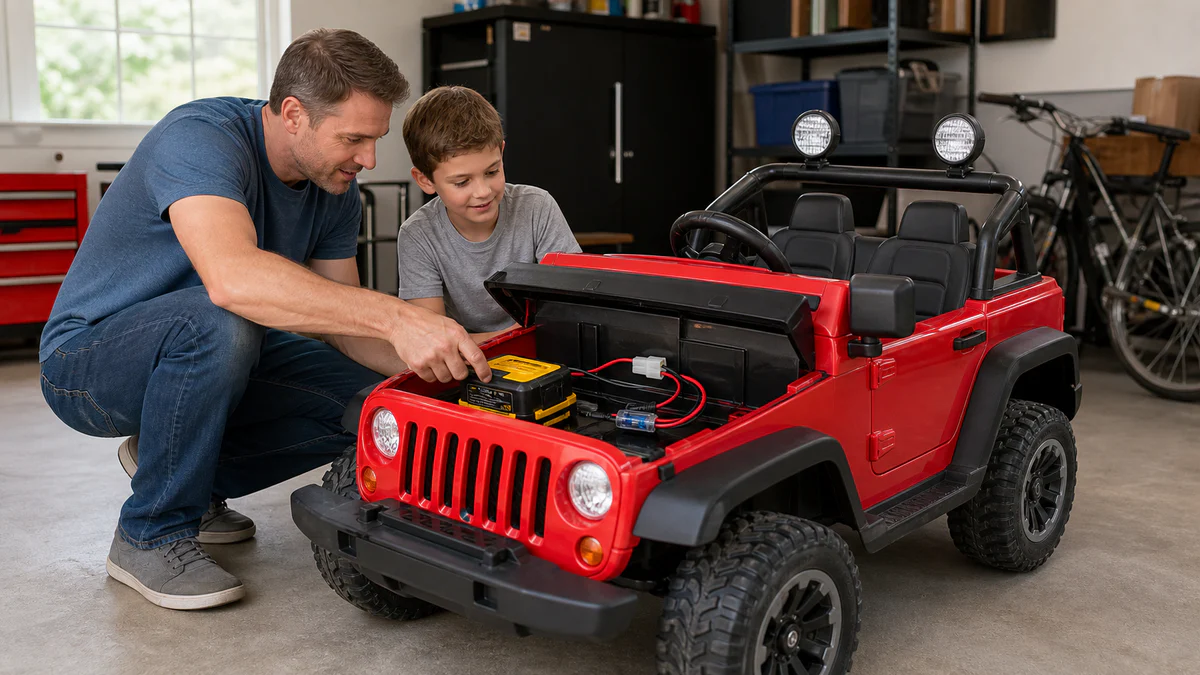
This guide exists because a very specific parent has a very specific problem: their kid's Power Wheels battery is either dead, failing, or charging for 12 hours and they have a DeWalt 20V MAX battery sitting on the workbench at full charge. The adapter that connects the two exists and it works.
The concept is straightforward. A DeWalt 20V MAX lithium battery contains more usable charge than a standard Power Wheels lead-acid battery, charges in under an hour with a fast charger, and weighs less. An adapter lets you plug the DeWalt pack directly into the vehicle's wiring.
Why This Works Well
DeWalt 20V MAX batteries are actually 18V nominal lithium — close enough to 12V lead-acid that most 12V Power Wheels motors run fine on them, often with a slight speed increase because lithium maintains voltage better under load. Longer run times, faster charging, and the ability to swap batteries mid-session are the practical benefits.
What You Need
- A DeWalt 20V MAX battery (standard size, not FLEXVOLT)
- A 12V Power Wheels vehicle
- The correct adapter for your model
- A 30A inline fuse to protect the wiring
One Caution
Not every adapter is high quality. Cheap versions use thin wiring that can overheat under sustained motor draw. Buy from a seller with reviews and one that lists a current rating. You want at least 18–20 AWG wiring in the adapter connector.
Quick Comparison
DeWalt 20V Power Wheels Battery Adapter
Various
DeWalt 20V MAX battery owners
- Voltage
- 20V MAX (18V nominal)
- Seats
- N/A
- Ages
- N/A
- Price
- $15–$30
Ryobi 18V Battery Adapter for Power Wheels
Various
Ryobi tool battery owners
- Voltage
- 18V
- Seats
- N/A
- Ages
- N/A
- Price
- $12–$25
30A Inline Fuse Kit for Power Wheels Adapter
Various
Wiring protection, all adapter installs
- Voltage
- N/A
- Seats
- N/A
- Ages
- N/A
- Price
- $8–$15
| Product | Best For | Specs | Price | Rating |
|---|---|---|---|---|
DeWalt 20V Power Wheels Battery Adapter Various | DeWalt 20V MAX battery owners | 20V MAX (18V nominal) · N/A seats Ages N/A | $15–$30 | 4.3 |
Ryobi 18V Battery Adapter for Power Wheels Various | Ryobi tool battery owners | 18V · N/A seats Ages N/A | $12–$25 | 4.1 |
30A Inline Fuse Kit for Power Wheels Adapter Various | Wiring protection, all adapter installs | N/A · N/A seats Ages N/A | $8–$15 | 4.5 |
Prices are approximate and subject to change. Always verify current pricing before purchasing.
Our Picks — In Detail
DeWalt 20V Power Wheels Battery Adapter
Various
20V MAX (18V nominal)Seats
N/AAges
N/APrice
$15–$30
The standard adapter for running a DeWalt 20V MAX battery in a Power Wheels vehicle. Mounts to the existing battery tray, connects to vehicle wiring, accepts any DeWalt 20V MAX slide-style pack. The improvement over stock lead-acid is real: faster charging, better voltage under load, and swap-ready sessions.
Pros
- Leverages existing DeWalt batteries
- Fast recharge vs. lead-acid
- Better voltage under load
- Swappable packs
Cons
- Quality varies — check wiring gauge
- Slight voltage over-spec
- No low-voltage protection on cheap units
Ryobi 18V Battery Adapter for Power Wheels
Various
18VSeats
N/AAges
N/APrice
$12–$25
The same concept as the DeWalt adapter, built for Ryobi ONE+ 18V batteries. If your garage runs Ryobi tools, this lets you use the same battery ecosystem for the ride-on. Ryobi 18V is nominal lithium — runs 12V Power Wheels very cleanly.
Pros
- Uses existing Ryobi batteries
- Fast Ryobi charger compatibility
- Clean voltage match
Cons
- Quality varies by seller
30A Inline Fuse Kit for Power Wheels Adapter
Various
N/ASeats
N/AAges
N/APrice
$8–$15
Not a battery or adapter, but essential for any drill battery conversion. A 30A inline fuse on the positive lead protects the Power Wheels wiring if the motor stalls or draws excess current. Cheap insurance. Every drill-battery adapter install should include one.
Pros
- Protects wiring from overcurrent
- Cheap ($8–$15)
- Easy to install
Cons
- Extra install step
- Requires correct fuse rating
What to Look For
Voltage (6V / 12V / 24V)
Higher voltage means more power, higher top speed, and better terrain handling. Choose based on your child's age, size, and where they'll ride. 12V is the most popular choice for ages 3–7.
Number of Seats
Single-seat models work for one child; two-seat designs are great for siblings or friends. Two-seaters often put more strain on the motor, so look for adequate power.
Terrain
Most 12V ride-ons handle flat grass and hard surfaces. If you have hills, rough grass, or gravel, look for 24V models with high-traction tires.
Safety Features
Look for seat belts, parental lockout switches, low/high speed settings, and parental remote controls — especially for younger or first-time riders.
Battery & Charging
Check battery life (usually 1–2 hours for 12V) and charge time (8–18 hours). Some premium models offer faster charging or higher-capacity batteries.